News
Stay up to date and informed on the issues and policies affecting Michigan consumer families in the face of corporate negligence and exploitation. Working to change legislature is crucial to enacting much-needed change in holding these entities accountable.
The Power of Government Immunity to Dodge Accountability is Tested by a Life-Altering Injury in Detroit
Government workers and entities are not responsible for injuring someone unless the actions that caused the injury were in "gross negligence". Unfortunately, determining that an employee acted with the standards of carelessness and indifference required for gross negligence is a notoriously difficult task, so government entities tend to escape accountability for injuring Michiganders just by being a government entity.
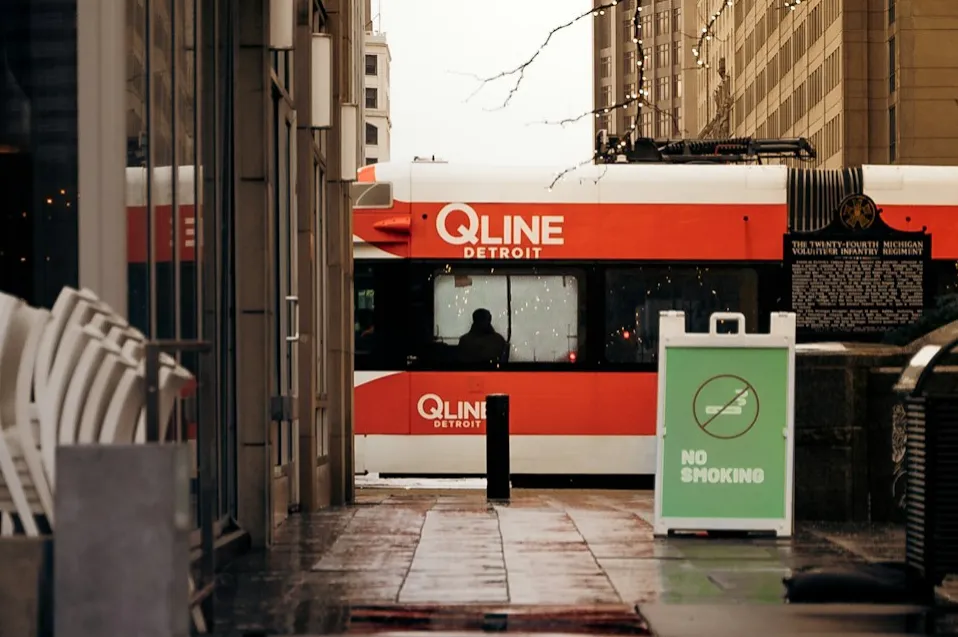
The power of governmental immunity to protect the state is being tested in Detroit, where in 2023, a QLine streetcar rear-ended an Uber SUV and injured a 63-year-old Uber passenger. The injuries were severe enough for the victim, Garry Fitzpatrick, to require a surgery to fuse two spinal discs together and a second surgery to combat infection, leading to medical bills totaling over $400,000. Fitzpatrick still struggles to move from the injuries suffered in the accident, and has since lost his source of income.
Government immunity is relevant to the case because the Regional Transit Authority (RTA), the agency that operates the QLine, is claiming government immunity, despite the ownership of the line belonging to M-1 Rail at the time of the accident. M-1 Rail, as a private nonprofit, did not have government immunity, but the QLine was sold to the RTA, a government entity, in 2024.
The Regional Transit Authority Act of 2012 prohibits a regional transit authority from taking on old debts, lawsuits, and other obligations unless a vote is held for the authority to take on those obligations. As a vote was never held, Fitzpatrick's attorney, Thomas Kerr, states the transaction may have violated Michigan law. Without the vote, the RTA is not legally exempt from taking on these obligations, so the RTA is seeking government immunity as another strategy to avoid compensating Fitzpatrick.
The RTA also claims that the QLine should not be responsible under Michigan's standard for holding owners of a "motor vehicle" responsible for injury, as the QLine's usage of rails makes it a streetcar and not a "motor vehicle". Both this claim and the government immunity claim have been contested by Kerr. He states that if the RTA wins this case, it would be disastrous for Detroit residents, as anyone who is hurt by the QLine will not be able to do anything to get compensation.
As recently reported by George Hunter in the Detroit News, the safety manager of the Regional Transit Authority also confirmed under oath in 2025 that the incident was preventable, and that the operator of the streetcar could have stopped sooner to avoid an accident. The driver of the streetcar was also involved in a preventable accident months before the November 2023 incident. Kerr is adamant that the training received by QLine operators is negligible, leading to frequent QLine accidents that can scale from minor vehicle damages to, in Fitzpatrick's case, life-altering injuries.
Wayne County Circuit Judge Annette J. Berry heard arguments for the lawsuit's dismissal on June 30th, and a trial for the accident is scheduled for September. The RTA is looking to use Michigan's government immunity shield to hide from their responsibility to compensate Fitzpatrick. As the case unfolds, we are hopeful the victim will be rightfully compensated for the injuries cased by the QLine, and that the RTA will be held accountable despite their plea for government immunity. Government entities should not be able to hide behind a universal shield to avoid accountability, and this case is just one example of how government entities continue to use their immunity to kick Michigan consumers while they're down.
Copyright ©2026. Protect MI Families. All Rights Reserved. Protect MI Families cannot provide legal advice or services as to individual cases. Those who seek assistance or answer to specific questions as to individual cases should consult with a private attorney or public defender.


